Tourism websites that turn travelers into bookings.
Tourism website design for tour operators, surf schools, hotels and eco-tourism businesses in Costa Rica — built around how travelers actually research, decide, and book.
What a tourism website needs that a generic website doesn't
A corporate site and a tourism site solve different problems. Here's what tourism specifically requires.
Direct booking & reservation
Real-time availability and payment built in — a visitor becomes a booking, not a maybe. Booking systems →
Bilingual for international travelers
Real English content, not a translated afterthought, next to properly written Spanish.
Mobile-first for on-the-go research
Loads fast and books easily on a small screen — genuinely where most of your traffic happens.
Visual storytelling that sells
Strong imagery built to make someone picture themselves there, not just read about it.
Built for every type of tourism business
Tourism isn't one business — it's many, each with different needs. Here's how we adapt.
Tour operators & activities
Multi-tour scheduling, capacity limits, and add-ons built around your operation.
Hotels & boutique lodges
Room availability, seasonal rates, and a flow that competes with OTAs.
Hotel websites →Adventure & eco-tourism
Multi-day itineraries and storytelling that sells remote experiences.
Why direct bookings matter more for tourism than any other industry
Almost every other business sells to people who already know them. Tourism mostly sells to strangers — and that's exactly why OTAs got so powerful.
Once a traveler finds you, there's no reason to keep paying Booking.com or Viator 15–25% to introduce you to someone who already wants to book with you.
How much does a tourism website cost?
Tourism sites tend to cost a bit more than a standard business site — booking and bilingual content are usually built in from the start.
Tourism Website
- No live booking
- Mobile-first design
- Visual storytelling
Website + Booking System
- Real-time availability
- Online payments
- Bilingual EN / ES
- SEO-ready foundation
Multi-Property / Large Catalog
- Multiple tours or rooms
- Seasonal pricing rules
- Custom integrations
Every project starts with a fixed quote in writing, based on what your business needs.
Our process for tourism websites
The core process follows our standard approach, with a few things specific to tourism built in.
Discovery call
We learn your tours, rooms, season, and where you're losing direct bookings today.
Plan & booking setup
We map the booking flow alongside the site structure and content plan.
Design with visual impact
Strong imagery and layout built to sell the experience, not just list it.
Build & connect
We develop the site and connect booking and payment systems end to end.
Test real scenarios
Including how the site handles a sudden traffic spike from a viral post.
Launch & ongoing support
We stay on through your season, not just at launch.
Why choose us for your tourism website
Tourism in Costa Rica has its own rhythm, and a generic web designer often doesn't account for it.
We understand the season
Built with high and low season, and the traffic spikes that come with them, in mind.
Bilingual, both ways
Real English and Spanish content, not a translated afterthought.
Booking-first thinking
Every site we build is designed to capture direct bookings, not just inquiries.
Web, booking & marketing in one
Your site, reservations, and visibility on Google from the same team.
We work with independents
Small, family-run tourism businesses — not just large hotel chains.
Tourism websites we've built
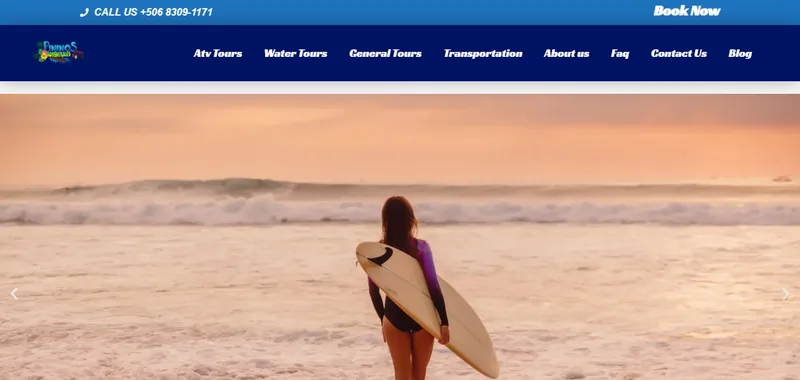
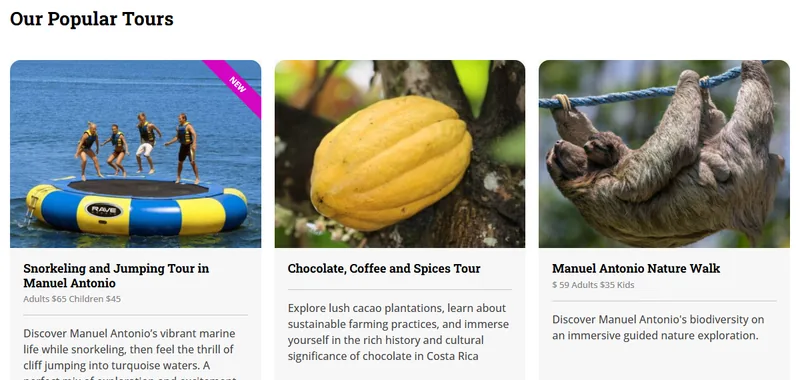
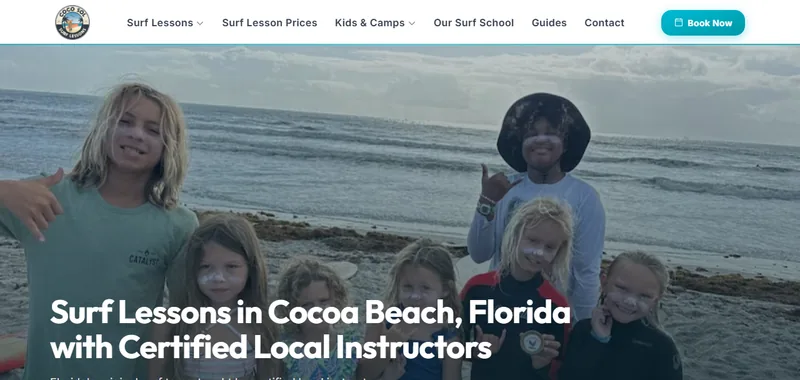
Tour operators, guides and surf schools taking bookings online.
★★★★★"Working with 321 Solutions was an excellent decision for my tour company. They helped me modernize the whole business, from our image and online presence to the way we present our services to customers."
— Ligia Murrillo, tour company owner · Google review, translated from Spanish
Tourism website design in Costa Rica: frequently asked questions
The questions we hear most from tourism business owners planning their site.
A tourism website is built around how travelers actually research and book, not just how a typical business presents information. That means real-time availability and payment built in, genuine bilingual content, mobile-first design, and visual storytelling that sells the experience rather than just listing features.
It depends on how you're currently handling reservations. If bookings come through WhatsApp, email, or a notebook, a real booking system usually pays for itself quickly by stopping reservations from slipping through and removing OTA commissions. If volume is still low, a strong informational site with a simple inquiry form can be the right starting point.
Yes, and this is one of the most important pieces of a tourism site specifically. Sites get built in English, Spanish, or both, with real copywriting in each language rather than automatic translation, so neither audience feels like an afterthought.
Tourism sites built right are designed to handle sudden jumps in visitors, since a mention in a travel blog or a viral post can send far more traffic than a normal day. Fast, efficient hosting and clean code from the start are what turn a spike in attention into bookings instead of a crashed site at the worst possible moment.
Tourism websites tend to cost somewhat more than a standard business site, mostly because booking functionality and bilingual content are usually built in from the start. As a starting point: from $1,500 without live booking, from $2,800 with a full booking system, and from $4,500 for a multi-property or larger-catalog site.
Independent operators are who this is built for — tour operators, surf schools, and family-run lodges, not just large hotel chains with in-house marketing teams. The approach fits the size and budget of an independent business.
Most businesses sell to people who already know them, but tourism mostly sells to strangers finding a business for the first time — exactly why platforms like Booking.com and Viator became so powerful. Once a traveler finds you, there's no reason to keep routing that booking through a third party taking a 15–25% cut every time.
Yes — this needs to be the default for tourism specifically. Travelers research and book constantly from their phones, so the booking flow itself, not just the layout, has to work smoothly on a small screen, since that's genuinely where most tourism traffic happens.
This applies broadly: tour operators and activity providers, surf schools, hotels and boutique lodges, and adventure or eco-tourism businesses with multi-day itineraries. Each has different specifics, but the underlying need for direct bookings, bilingual content, and mobile-first design applies across all of them.
Most tourism websites go live in 4–8 weeks, depending on complexity — a site with a full booking system, multiple languages, and a large catalog takes longer than a simpler informational site. The timeline gets confirmed once the specific scope is clear.
Get a free tourism website quote
Tell us about your tours, rooms, or experiences and get a fixed quote — no cost, no pressure. We'll reply within one business day with clear next steps.